Rumi de Baires: the thinking person's house head.
Ahead of his first gig in London at Handsome on August 8th, Vienna based DJ and promoter Rumi de Baires took some time to talk about music, his home country of Argentina, and his journey from psychology academic to dance floor doyen.
Rumi de Baires grew up in Buenos Aires, the country’s colossal capital that sits on the estuary of the Rio de la Plata, so called for the supposed rich deposits of silver surrounding it (as was Argentina itself, which translates as something close to ‘silvery land’). These mineral riches were a significant part of what brought European armies centuries ago in their quest for ‘Gold, God, and Glory’: the extraction of vast wealth for the imperial project alongside the systematic expansion of empire and Catholicism. This is not the place for deep dives into colonial history, but the opprobrium the country recently received during the World Cup quickly introduces what de Baires sees as an unbalanced portrayal of the country.
“I don't really care about football, but I do care about the implications this vicious campaign has on my people. Yes, racism exists in Argentina, but the narrative has taken both a misleading and dangerous turn. In fact I am in the process of writing a piece about it right now. Because, when things keep my mind busy for days at a time, my therapy is to write. Writing has always been my catharsis”.

As of his experience growing up Black in Argentina, Rumi says, "I think that became all the more salient to me the moment I left Argentina… it was then that people both from Argentina and elsewhere would look skeptical and ask, 'But where are you really from…? I thought there were no Black people in Argentina?'. We are a country of immigrants but some get to be seen as more Argentinian than others.”
His parents separated in his early life and he was raised by his mother and grandparents while his father moved to Florida. His connection to his ancestors' heritage was maintained through the large Cape Verdean community in Buenos Aires. “My grandparents and great-grandparents came to Argentina in the twenties and thirties, and while most people now with connections to Cape Verde were not born there, there is still a community that I would dip into every couple of months as a child for cookouts and gatherings. I would go with my mom and grandparents and soak it all in: the language, the food, the music.”
It was not until 2023 that he visited the islands himself. “I went there with my dad and sister, which was our first holiday together. I knew it would be a special trip, but I never thought it would hit me so hard. The moment I set foot on the island, I started crying,” he says. “It’s hard to describe what I felt but was very emotional. Since then I’ve been connecting a lot more with my Cape Verdean heritage.”
Raised in modest circumstances, he says his mother instilled in him the need for education early on. At nineteen he moved to live with his father in Florida, where he started studying psychology. It was while studying in Florida that he bought his first vinyl deck, a Denon double CD player, and a Behringer mixer. It was the beginning of creating a unique musical sensibility informed by a love of the African rhythms, jazz, and Latin music he heard during his childhood, with the taste for electronic music (most notably, house) that he developed in his early twenties.
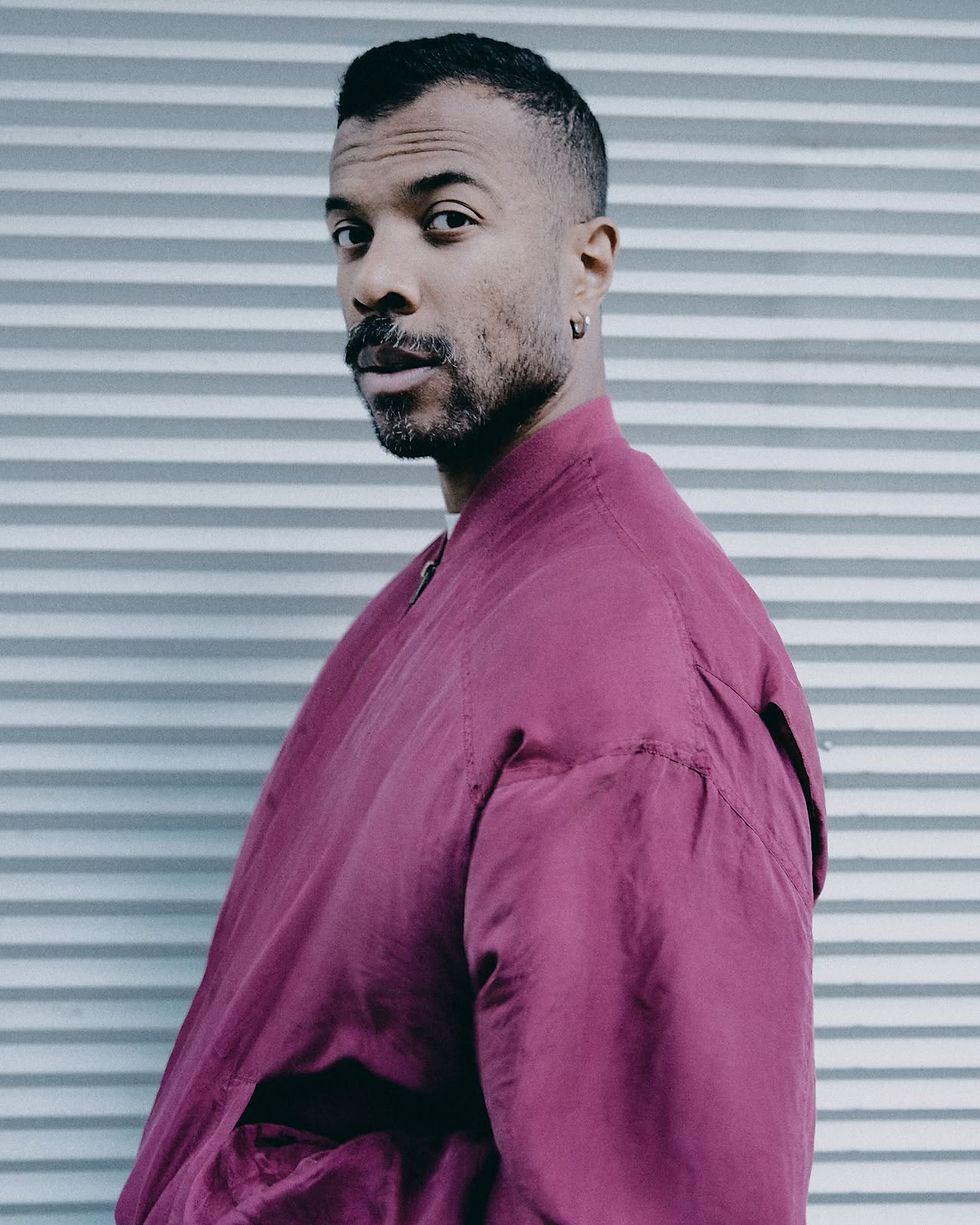
His mother’s advice to study ran deep in him. He went on to graduate with honours in Florida and then continued studying on a scholarship in Zurich, Switzerland. A master’s program led to a PhD, followed by a decade-long career in academia.
“I worked in the intersection of occupational health and work psychology, but with a focus on social psychology,” he says. “It was while I was doing my PhD in Zürich that I met my now partner who lived in Vienna. We were in a three-year long-distance relationship and then once I had finished my studies I moved here and continued doing post-doctoral work.”
But the itch that had started years back in Florida on a single deck and with very sporadical party appearances hadn’t gone away. The love of music, of community, of dance floor connection remained. What started as a largely solitary pursuit was brought to life a few years later. “I think my club experience in my early twenties had been pretty lame. I’d been learning to DJ and building my record collection for five years, but it wasn’t until I went to Djoon club in Paris in summer 2009 that everything changed,” he says. “It was a Sunday afternoon and I went with a friend. For the first time I got to see what club culture was about the true meaning of community, people dancing together, creating ciphers… it defined in me a way of understanding. I was, like, okay - I get it now.”

A year later he started a six-month internship at a university in Newark. “And Newark is just a train away from New York…” he says, implying the obvious. “Wednesday nights I was at Cielo for RootsNYC with Louis Vega. There were also Monday nights with Francois K for Deep Space. As a student on limited budget, I always made sure to be there at 9pm for free entry. Then on Thursdays I was at Ian Friday and Manchildblack’s party Libation at Sullivan Room. And on Fridays… I mean, yes, I was there on an internship, and it didn’t happen every week, but I did get sidetracked with what New York had to offer club-wise.”
We all know the dangers of getting sidetracked with house music and club culture. You get hooked. Once that groove gets in it ain't always easy to extricate yourself. Life goes on, but there’s a perpetual ear cocked for the high hat and half an eye on the next dance floor on which to commune. And so as he pursued a career in academia he started seeking out like-minded people: vinyl aficionados, night denizens, those who had had a similar conversion as that Sunday day party in Djoon.
His first foray into nightlife was in 2019 when with three peers (Altroy Jerome, Flo Real, and Jörg Recordshack) he launched A Party Called JACK. It’s an event that has become a lynchpin of Vienna’s underground scene and that collective of four now stands at ten. “It’s a very mixed party with people from all walks of life,” he says. “It’s intergenerational. We have sixty-year-olds coming to our events to dance alongside twenty-year-olds and I love to see that. There is zero pretentiousness, just people enjoying themselves dancing to house, funk, disco. It’s been a real joy to do this with the people involved because for a long time I was struggling to find my home on the dance floor… I felt like my music wasn’t landing and then I found my little tribe of house heads here in Vienna and we started to create new things. It’s something we are all very proud of.”

And just as it started to flourish, the pandemic arrived.
This forced ceasing of activity brought attention to the psychological and physical costs of working in academia for over a decade while nurturing a creative process. “It was sometime in 2021 that I just collapsed. I had gone from travelling to conferences, teaching, being in contact with people to just sitting in front of a computer for days and weeks at a time. I started to feel a void in what I was doing and I wasn’t happy; I was on sick leave for a month due to a burnout-induced depression. It was then that something clicked.”
“You know, growing up I never had that safety net of making a mistake and having my parents there to back me up financially , and so for a long time I thought that academia was my only path,” he says. “I never had the courage to go full-time as an artist, to go for it as a DJ. I’ve been playing for a long time, since 2005, but I struggled to see it as a career and I had a fear of going into the unknown. But then I had this click moment during the pandemic which lead to me eventually saying, ‘I’m gonna give this a try.’”
In 2021 he co-founded GAZE with Night Owl and event organiser Nadine Cobbina (DJ HOLY LOLLY). It’s an event with a stronger focus on the queer community and music that leans further into four-to the-floor night long sessions. “The sound is housey, sometimes a little more ravy and with some flavours of techno in comparison to A Party Called JACK,” he says. Last October they celebrated their fourth anniversary.

This year his focus has been less on promoting and more on music production and DJing. His DJing schedule includes some of Europe’s on-point festivals and he’s an increasingly regular guest at Panorama Bar, Amsterdam’s Club Raum and LuxFragil in Lisbon. It was while listening to one of his sets recorded at Lux Fragil that I first heard him play. Serendiptously, his agent contacted me a few weeks later. One thing led to another, and now we get to hear him in London.
“I want to continue doing parties, but at the same time, I feel like I need a reset. Next year the plan is to do more one-off locations, but I’m aware that entails more work so it’s a question of organisation and bringing in more people into the team."
There is also a forthcoming record label but he is reluctant to share much about that for now. “I just feel like for the longest time I’ve been wanting to produce music, but not really knowing what to do, and now I feel I found the purpose. And I am doing it together with a friend and one of my favourite DJs in Vienna: JP Bechamel.”
We’ll watch this space.
Rumi de Baires plays Handsome at Eagle London on Saturday August 8th. He’ll be joined by Paul Heron and myself. I hope you can join us. Tickets available here.


Comments